ReadyWhen The Lights Go Out
Available as an in-person or online exercise for organizations, arts and cultural conferences, and government agencies.
The ReadyWhen Tabletop
— Jon Barnwell, Associate Vice President Safety & Security, The National World War II Museum
Who it’s for:
- Arts and culture: museum professionals, venue and festival staff or volunteers, arts and arts advocacy organizations, cultural administrators, and other arts and culture workers
- Emergency management: EM professionals, public safety officers, first responders, and planners looking to build stronger relationships with the cultural sector
- Civic and community: faith-based organizations, municipal leaders, funders, neighborhood organizers, and networks
The activity works well within a single sector or across all three — some of the best conversations happen when the room is mixed.
What it builds on: In this activity, everyone brings what they already know about their role, organization, and broader city or neighborhood. The game takes care of the rest.
What it adds: The gameplay jumpstarts how you think about readiness. By the end of a session, you’ll have a clearer picture of four things:
- the capacities your community already holds,
- the constraints that could slow response,
- the partners you should be building relationships with now,
- and the investments most worth making before the next disaster arrives.
Starting the conversation about readiness
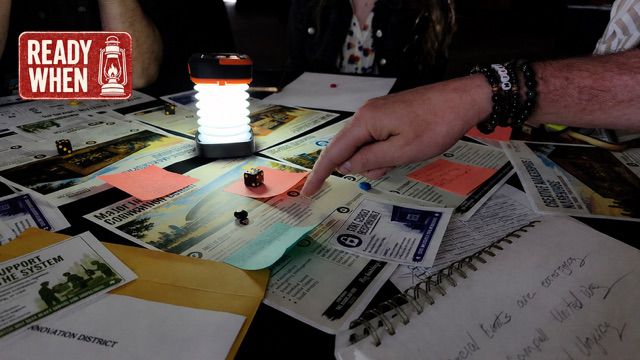
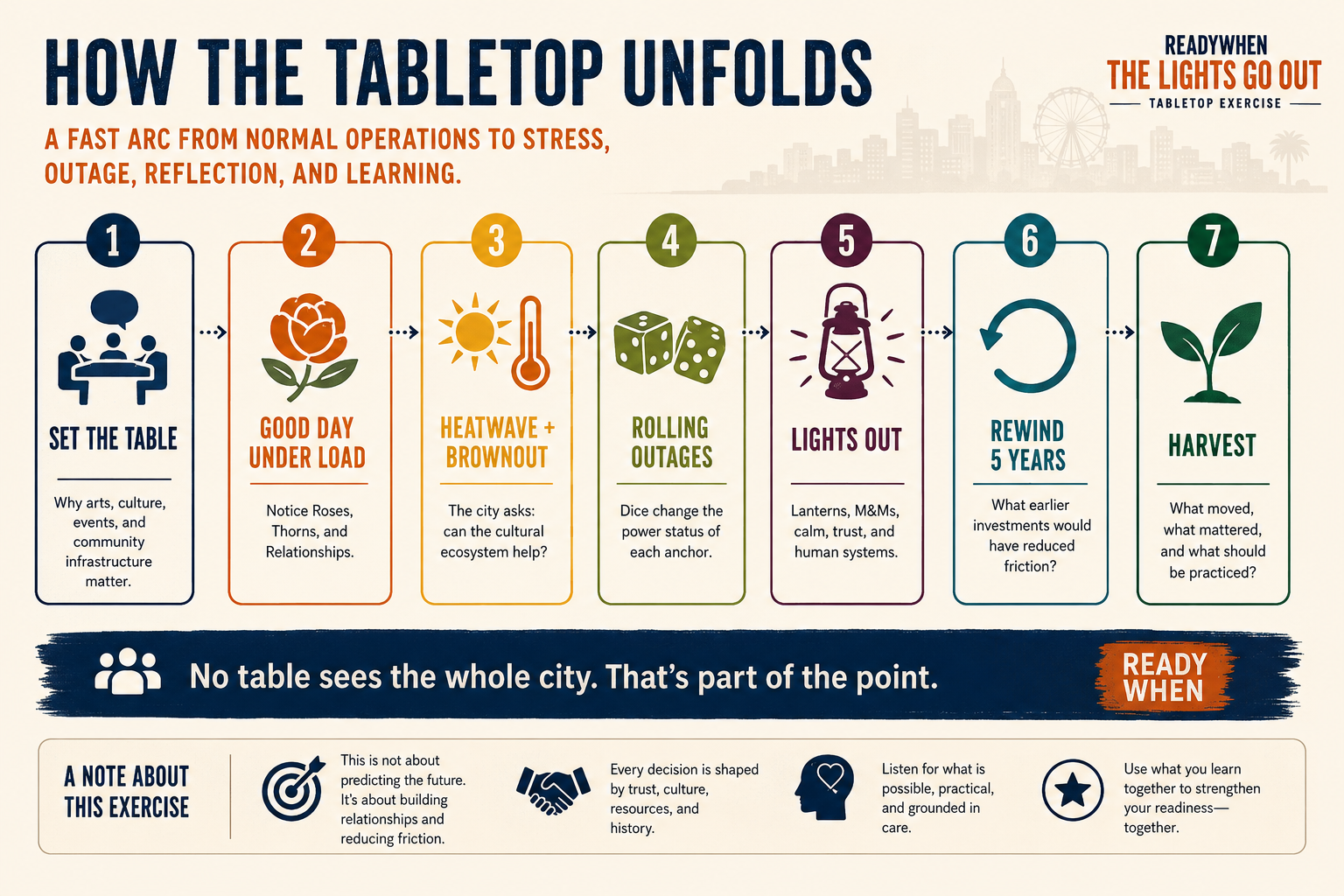
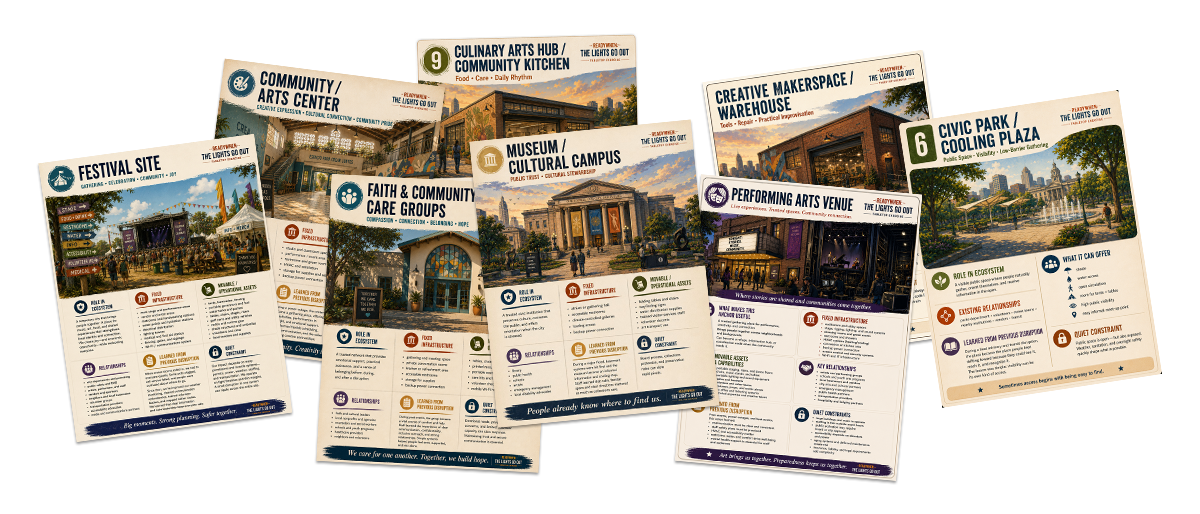
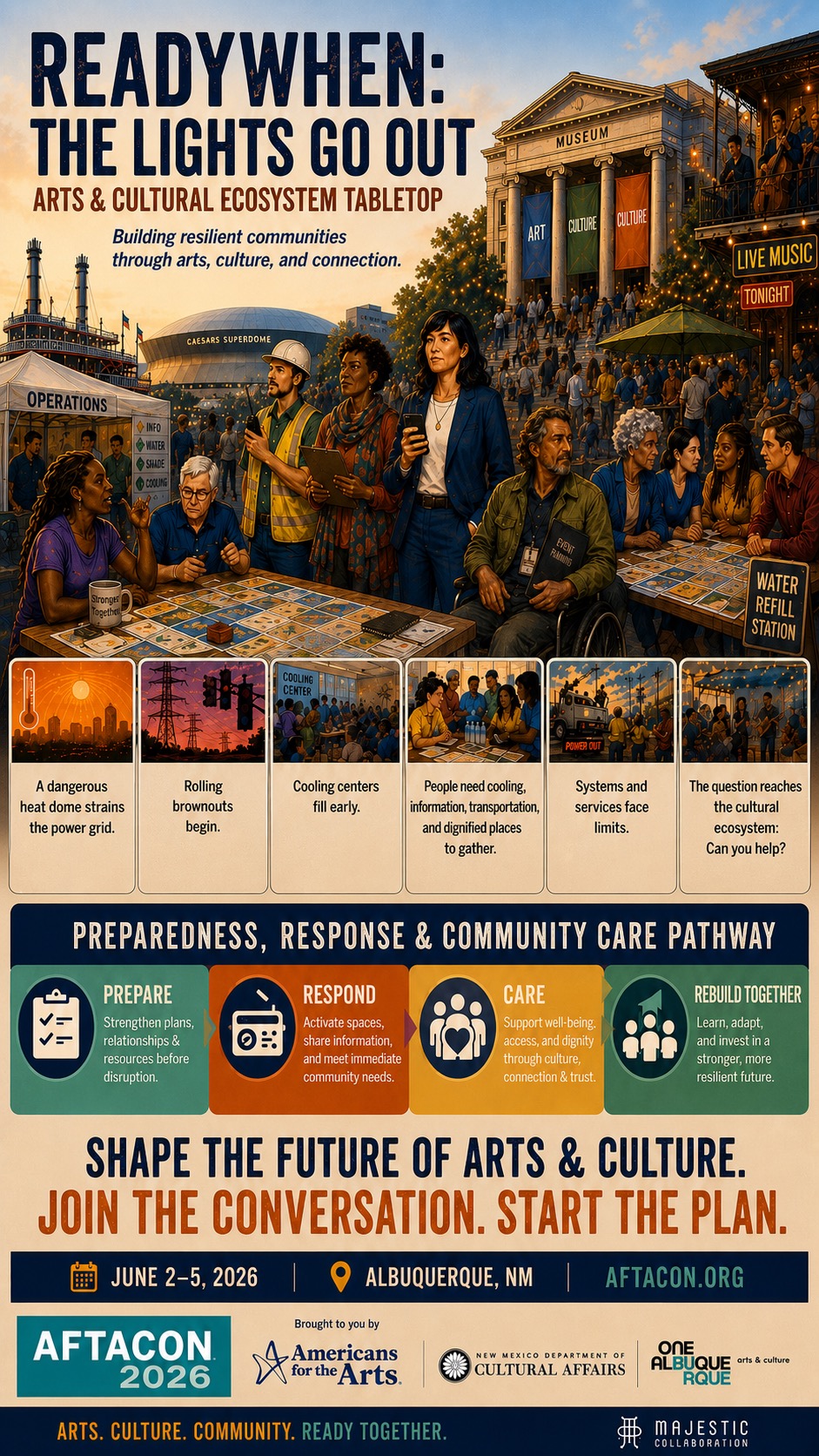
The Tabletop is a facilitated 90-minute experience, designed to fit as easily into a staff retreat or board meeting as into an emergency management workshop or conference breakout. Around the table, participants build a city as they walk through a scenario together — a heat dome, a sustained power outage, a larger disaster — drawing cards and rehearsing the decisions their community would actually face. Each round surfaces what the community already has, what’s missing, and who should be talking to whom before the next crisis arrives, and each brings new challenges to confront, including an immersive finale.
It’s especially useful for arts and cultural organizations exploring their role in local readiness, for emergency management departments looking to build relationships with the cultural sector, and for municipal leaders, funders, and networks who want to move the conversation about emergency preparedness from abstract concern to concrete next steps. No prep required, no wrong answers, and everyone leaves with a new way of looking at readiness.
We can bring the activity to your gathering, or you can purchase a license to use it on your own, complete with facilitator guides and ready-to-print materials.